
Photometer J.Decoudun Brass Extinction Exposure Meter * Brevete S.G.D.G Paris
£69.99
1 in stock
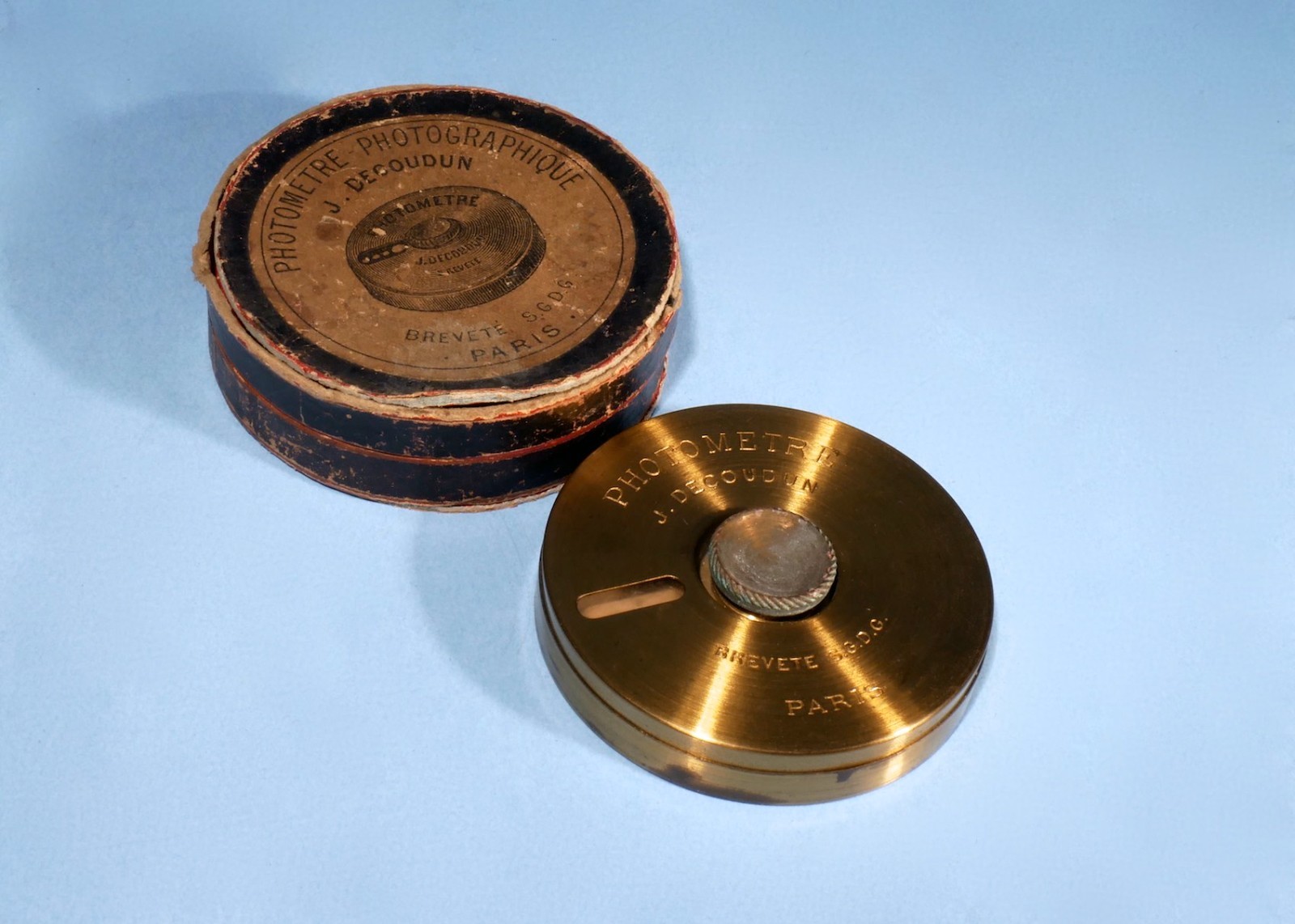
Photometer J.Decoudun 19th Century Brass Circular
Extinction Exposure Meter
Complete with case
Introduced around 1887-1888 by J. Decoudun in Paris, the Photometre is a 19th-century, brass, circular extinction exposure meter recognized as one of the first Through-The-Lens (TTL) devices. It was designed for plate cameras, with users placing it against the ground glass to measure light passing through the lens.
Key Features and Operation:
Design: A small, typically brass circular device (approx. 6.5 cm) featuring a rotating front knob and a viewing slot.
Operation (TTL): The photographer places the meter against the camera’s ground glass (with the lens open) and rotates the knob to find the setting where light just becomes visible (an “extinction” method).
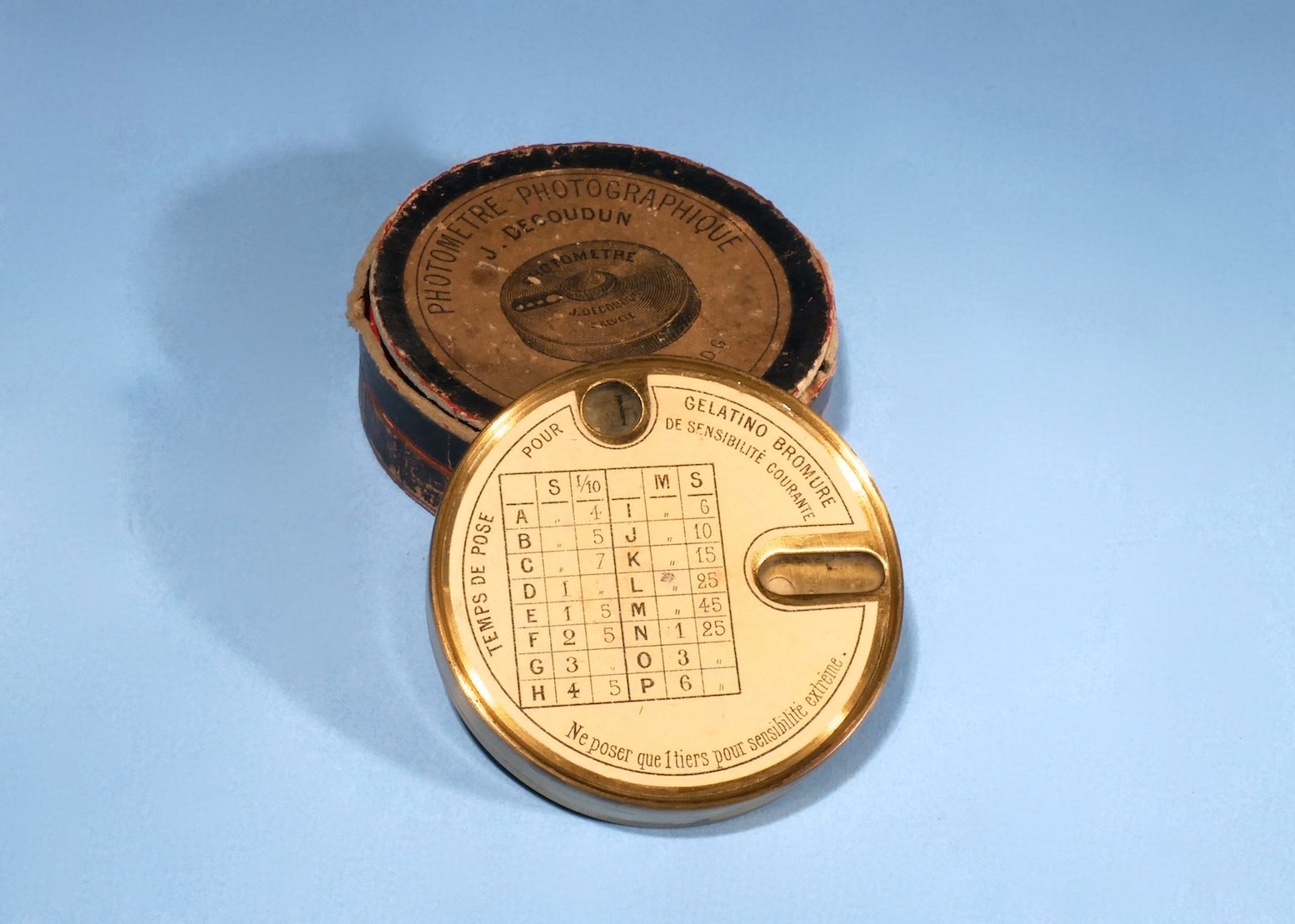
Measurement: A disc inside features 16 holes, with a letter (A-P) corresponding to the light passing through, which is then matched to an exposure table on the back.
Table: The back includes a table for exposure times (ranging from 4/10 seconds to 6 minutes), tailored for Gelatino-Bromure plates.
Markings: Marked “J. Decoudun,” “Breveté S.G.D.G.” (Sans Garantie Du Gouvernement), and “Paris”.
The device was used for determining exposure by calculating based on the light intensity directly, rather than using chemical light-sensitive paper, marking a significant step in photographic technology.
The meter is in excellent cosmetic condition, please see photos provided.
Complete with its case, however the case is not intact, it shows some age related wear, please see photos provided.
Any questions, please ask.
International buyers are welcome.
If you have any problems with the delivery or the item, please let me know so I can resolve it!
All deliveries will be Tracked and Signed-For, I also pack all items to high standards.
Please buy with confidence and check out my other items.
Thanks for looking.
*****
1491
| Brand | |
|---|---|
| Type | |
| Dimensions | |
| Country of Origin |